




Many children struggle with reading and spelling, especially when they encounter unfamiliar words. It can be frustrating to see them stumble over a word, unsure of its meaning or how to pronounce it.
A strong understanding of roots, prefixes, and suffixes can make a huge difference. These word parts are the building blocks of language. When children learn how they work, decoding complex words and expanding vocabulary becomes much easier.
This blog will guide you through the basics of roots, prefixes, and suffixes. You’ll discover practical strategies and hands-on ways to help children develop stronger reading and language skills, all while making learning engaging and accessible.
Key Takeaways
-
Understanding roots gives children the ability to decode new words, expand vocabulary, and improve reading comprehension.
-
Recognizing prefixes and suffixes helps children understand how words change in meaning and function, supporting spelling and grammar.
-
Children who grasp word parts approach reading and writing with confidence, making unfamiliar words less intimidating.
-
Consistent, hands-on practice through reading, word exploration, and playful activities helps knowledge stick and makes learning enjoyable.
-
Support from parents and teachers through guidance, encouragement, and structured routines allows children to apply word knowledge effectively in everyday reading and writing.
What Are Roots?
Roots are the foundation of words, the central part that carries the core meaning. They serve as the building blocks for many other words, helping children unlock the meaning of unfamiliar terms without memorising every single word. Think of a root as the seed from which multiple words grow, each branching out with different prefixes or suffixes.

By understanding roots, children gain a framework for reading and writing. They can break down complex words into manageable parts, making language less intimidating and more predictable.
For instance:
-
scrib → describe, prescribe, inscribe
-
port → transport, import, export
-
spect → inspect, spectator, spectacle
Recognising these roots allows children to make connections between words and their meanings. When they encounter a new word, knowing the root gives clues about the word’s definition, pronunciation, and context. This strengthens both comprehension and spelling skills.
How Do Roots Help in Reading and Writing?
Roots make reading more approachable. Instead of seeing a long, unfamiliar word as a barrier, children can identify the root and understand the essence of the word. In writing, this knowledge enables them to construct words more confidently and choose precise vocabulary. For example, a child familiar with the root “act” can understand and use action, react, or activate accurately.
Learning roots also fosters a sense of curiosity about language. Children begin to notice patterns, compare words, and even predict meanings. This builds not only practical literacy skills but also cognitive skills like pattern recognition and critical thinking.
Common Roots Children Should Learn
Below is a list of 10 important roots with their meanings and examples:
|
Root |
Meaning |
Example Words |
|
scrib / script |
write |
describe, prescribe, manuscript |
|
port |
carry |
transport, import, export |
|
spect |
see |
inspect, spectator, spectacle |
|
ject |
throw |
eject, project, reject |
|
struct |
build |
construct, structure, instruct |
|
act / ag |
do, act |
action, react, agent |
|
tele |
far, distant |
telephone, telescope, teleport |
|
bio |
life |
biology, biography, biodegradable |
|
form |
shape |
transform, formation, conform |
|
cred |
believe |
credible, incredible, credit |
Why Should Children Learn Roots First?
Focusing on roots provides a solid foundation for language learning. Here is why it matters:

-
Decoding New Words: Children can break down unfamiliar words into meaningful parts, making reading smoother.
-
Vocabulary Expansion: Understanding a single root can open the door to multiple related words, expanding their lexicon naturally.
-
Confidence Boost: Recognising roots empowers children to tackle challenging texts without fear.
-
Preparation for Affixes: Once roots are understood, adding prefixes or suffixes becomes intuitive. Children can understand how words change in meaning or function.
Encouraging children to explore roots first sets them up for long-term success in reading, writing, and vocabulary development. Parents and teachers can reinforce this by pointing out roots during reading, creating root-based word lists, and playing word-building games.
Once children understand the foundation of words through roots, the next step is to explore how adding prefixes can change those meanings and expand their vocabulary even further.
Also Read: Understanding Textual Features in Reading and Writing
What Are Prefixes and How Do They Change Words?
Prefixes are small word parts added to the beginning of a root word. They change the word’s meaning and sometimes its grammatical function. By learning prefixes, children can unlock the meanings of many new words without memorising each one individually. Understanding prefixes makes reading, writing, and vocabulary development much easier and more enjoyable.
Which Prefixes Should Children Learn First?
Focusing on high-frequency prefixes gives children a practical foundation for reading and vocabulary. These prefixes appear often in everyday words and help children decode meaning quickly. Below is a list of 10 important prefixes with their meanings and examples:
|
Prefix |
Meaning |
Example Words |
|
un- |
not |
unhappy, unfair, unknown |
|
re- |
again |
rewrite, replay, redo |
|
pre- |
before |
preview, pretest, preschool |
|
dis- |
opposite, not |
disagree, disconnect, dishonest |
|
mis- |
wrongly |
misbehave, misplace, misunderstand |
|
in- |
not |
inactive, incomplete, invisible |
|
im- |
not, into |
impossible, import, implant |
|
non- |
not |
nonstop, nonsense, nonstick |
|
sub- |
under, below |
submarine, submerge, subterranean |
|
over- |
too much |
overcook, overreact, overestimate |
Learning these prefixes first allows children to spot patterns across multiple words. By recognising these building blocks, they can often guess the meaning of unfamiliar words, boosting reading comprehension and spelling skills.



How Can Understanding Prefixes Help Children?
Knowing prefixes gives children a toolkit for decoding words and predicting meanings. Benefits include:
-
Improved Comprehension: Children can figure out unfamiliar words while reading without constantly stopping for a dictionary.
-
Stronger Spelling Skills: Recognising consistent prefixes helps with spelling longer words correctly.
-
Word Prediction: Understanding prefixes allows children to anticipate a word’s meaning, boosting reading speed and confidence.
Parents and teachers can reinforce this learning by pointing out prefixes in everyday reading, practicing with word cards, or creating simple word-building games. This makes learning interactive and helps children internalize the patterns.
Just as prefixes modify the beginning of a word to change its meaning, suffixes work at the end of a word, shaping its role in a sentence and creating new words.
What Are Suffixes and How Do They Affect Words?
Suffixes are word parts added at the end of a root word. They change the word’s meaning, grammatical role, or both. By learning suffixes, children gain the ability to understand how words function in sentences, improve spelling, and expand their vocabulary. Just as prefixes modify the beginning of a word, suffixes modify the ending, giving words new roles and forms.

Types of Suffixes
Suffixes generally fall into two categories: inflectional and derivational.
-
Inflectional Suffixes – These change the grammar of a word without creating a new word. Examples include:
-
walk → walked (past tense)
-
run → running (present participle)
-
dog → dogs (plural)
-
-
Derivational Suffixes – These form new words by changing the word’s meaning or part of speech. Examples include:
-
teach → teacher (noun from verb)
-
happy → happiness (noun from adjective)
-
act → action (noun from verb)
-
Common Suffixes Children Should Learn
Here is a table of high-frequency suffixes with examples:
|
Suffix |
Type |
Example Words |
|
-ed |
Inflectional |
walked, jumped, played |
|
-ing |
Inflectional |
running, singing, painting |
|
-s / -es |
Inflectional |
cats, boxes, buses |
|
-er |
Derivational |
teacher, worker, runner |
|
-ness |
Derivational |
happiness, sadness, kindness |
|
-ful |
Derivational |
joyful, careful, helpful |
|
-less |
Derivational |
hopeless, careless, fearless |
|
-ly |
Derivational |
quickly, happily, slowly |
|
-ion / -tion |
Derivational |
action, creation, attention |
|
-able / -ible |
Derivational |
readable, flexible, understandable |
Why is it Important for Children to Learn Suffixes?
Learning suffixes helps children:
-
Understand Grammar: Know how words function in sentences (tense, plurality, part of speech).
-
Improve Spelling: Recognize patterns that guide correct endings.
-
Expand Vocabulary: Form and understand new words based on familiar roots.
-
Enhance Reading Comprehension: Decode complex words independently and infer meaning.
Parents and teachers can support suffix learning through activities like word-building games, sentence creation exercises, and suffix-matching cards. Regular practice helps children internalize patterns, making reading and writing smoother and more confident.
Now that we’ve explored how a suffix modifies a word, it’s time to see how the full trio: prefix root suffix works together to create meaning and shape language.
Also Read: Common English Spelling Patterns: Examples, Rules, and Tips
How Do Roots, Prefixes, and Suffixes Work Together?
Roots, prefixes, and suffixes are the building blocks of words. When children understand how they combine, they can decode unfamiliar words, improve spelling, and expand their vocabulary.

-
Roots give the word its core meaning.
-
Prefixes modify the beginning of the root to alter meaning.
-
Suffixes are added to the end to change the meaning or grammatical function.
By learning to identify and combine these parts, children can break down complex words into understandable chunks. This skill is essential for confident reading, writing, and comprehension.
Here’s a table showing how roots, prefixes, and suffixes combine to form words, along with their meanings:
|
Word |
Root |
Prefix |
Suffix |
Meaning |
|
Unhappiness |
happy |
un- |
-ness |
The state of not being happy |
|
Redoing |
do |
re- |
-ing |
Doing something again |
|
Transportable |
port |
trans- |
-able |
Can be carried across or moved |
|
Disagreeable |
agree |
dis- |
-able |
Not pleasant or agreeable |
|
Misunderstood |
understand |
mis- |
-ed |
Incorrectly understood |
By exploring these combinations, children not only understand individual word parts but also develop the confidence to tackle new and complex words independently.
Understanding how roots, prefixes, and suffixes function individually is just the first step. Recognising how they combine in words helps children unlock deeper meaning and see how language works in context.
The Importance of Combining Roots, Prefixes, and Suffixes
Understanding how roots, prefixes, and suffixes work together is more than memorising parts of words. It equips children with a practical strategy for reading, writing, and vocabulary development. Here’s why it’s so important:
1- Decoding Unfamiliar Words
When children encounter a new word, recognising the root and any added prefixes or suffixes helps them figure out the meaning without relying solely on a dictionary.
For example: Misinterpret: Knowing mis- means “wrongly” and interpret means “explain or understand,” children can infer the word means “to understand incorrectly.”
2- Improving Reading Comprehension
Breaking words into meaningful parts allows children to understand complex texts more easily. They can read faster and make connections between words, which strengthens overall comprehension.
3- Enhancing Spelling and Writing
Recognising patterns in roots, prefixes, and suffixes makes spelling complex words more predictable.
For instance, knowing that -able often forms adjectives from verbs helps children spell readable, manageable, or understandable correctly.
4- Expanding Vocabulary Naturally
Learning a single root opens the door to multiple related words. For example, understanding the root scrib / script (write) gives access to words like describe, prescribe, manuscript, and inscription.
5- Predicting Word Meaning
Children can make educated guesses about unfamiliar words using known word parts. This fosters independence in reading and encourages curiosity about language.
6- Building Confidence
When children understand the logic behind word formation, they feel empowered to tackle challenging texts without fear. This confidence often translates into better participation in reading and writing activities.
While consistent practice at home or in the classroom builds a strong foundation, some children simply respond better when learning feels like play rather than study.
That’s exactly why the FunFox Readers Club exists. Instead of rote memorization, children explore prefixes, roots and suffixes through stories, games and interactive challenges. The sessions are guided by encouraging teachers who make every moment feel like an adventure.
If your child lights up when learning becomes fun, this might be exactly what they need.
Now that children understand why combining roots, prefixes, and suffixes is important, it’s time to explore practical ways they can apply this knowledge.
How Can Children Practice Roots, Prefixes, and Suffixes?
Understanding roots, prefixes, and suffixes is only the first step. Practicing them regularly helps children internalize patterns, strengthen vocabulary, and build reading confidence. Here are several ways to make practice effective and enjoyable:
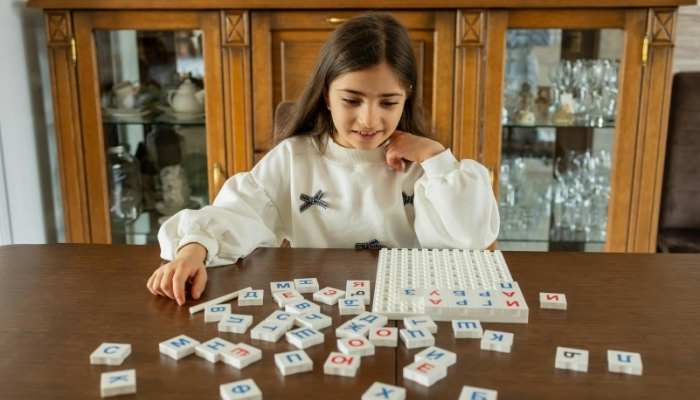
1. Word-Building Exercises
Encourage children to take a root word and create new words by adding different prefixes and suffixes. For example:
-
Root: play → replay, playful, playing, player
-
Root: happy → unhappy, happiness, happily
This helps children see how word parts combine and how meaning changes.
2. Flashcards and Matching Games
Create flashcards with roots, prefixes, and suffixes on separate cards. Children can:
-
Match roots with appropriate prefixes or suffixes.
-
Build new words and explain their meanings.
Games like these make learning interactive and memorable.
3. Reading with Word Awareness
While reading, ask children to spot roots, prefixes, and suffixes in texts. For example:
-
Highlight words like disagreeable, transportable, or misunderstood.
-
Discuss how each part contributes to the meaning of the word.
This reinforces the real-world application of word knowledge.
4. Writing Practice
Encourage children to use new words in their writing. Activities can include:
-
Writing sentences using a specific prefix or suffix.
-
Creating short stories with words derived from the same root.
This strengthens spelling, grammar, and contextual understanding.

5. Word Journals
Children can maintain a journal where they record:
-
New words they encounter.
-
The prefix and suffix, and root of each word.
-
The meaning of the word and a sample sentence.
This helps children review and retain knowledge over time.
6. Interactive Online Resources
Programs like FunFox Readers Club offer games and activities designed to practice roots, prefixes, and suffixes, combining learning with fun. Using FunFox can provide additional motivation and variety in practice.
To help your child strengthen their reading and vocabulary skills, explore our Readers Club.
By actively playing with words, spotting roots in reading, and experimenting with prefixes and suffixes in writing, children turn their knowledge into practical skills they can use every day.
While children can practice roots, prefixes, and suffixes on their own, support from parents and teachers can make learning more consistent, meaningful, and enjoyable.
Also Read: Decoding in Reading: Strategies, Examples, and Real-World Solutions
How Can Parents and Teachers Support Ongoing Learning?
Supporting children as they learn roots, prefixes, and suffixes is about creating consistent, enjoyable, and confidence-building routines. Here’s how parents and teachers can help:

1. Use Reference Lists and Routines
Keeping organized lists and daily routines helps children review and internalize word patterns consistently. Here are some ways to get started:
-
Maintain a list of roots, prefixes, and suffixes with examples.
-
Review 2–3 roots or prefixes daily and find words that use them.
-
Encourage children to add new words to the list as they encounter them.
-
Create a weekly challenge, e.g., use 5 new words in sentences or a story.
-
Use visual charts or posters to display common word parts for easy reference.
2. Encourage Reading Aloud and Word Exploration
Reading aloud while exploring words makes learning interactive and strengthens comprehension. Here’s what you can do:
-
Highlight roots, prefixes, and suffixes in books while reading aloud.
-
Discuss how each part changes the word’s meaning.
-
Explore synonyms and antonyms for new words.
-
Ask children to predict the meaning of unfamiliar words using known word parts.
-
Re-read favorite stories to spot repeated roots or suffixes.
3. Foster Discussion About Word Meanings
Talking about words helps children think critically and remember meanings more effectively. You can help by doing the following:
-
Have children explain the meaning of new words in their own words.
-
Create sentences or short stories using new words.
-
Connect words to real-life situations to make them memorable.
-
Play “Word Detective” where children identify word parts in texts around them.
-
Encourage peer discussions or small group activities around word formation.
4. Provide Empathetic Guidance
Patience and encouragement make learning enjoyable and help children build confidence. Here are some simple actions to support learning:
-
Praise effort, not just accuracy.
-
Be patient with mistakes; errors are part of learning.
-
Recognize individual learning styles and pace.
-
Celebrate small milestones to boost confidence.
-
Encourage curiosity rather than rote memorization.
5. Integrate Learning Into Daily Life
Applying word knowledge in everyday contexts strengthens retention and makes learning fun. Here are some practical tips for daily practice:
-
Play word games during travel, meals, or downtime.
-
Spot roots, prefixes, and suffixes in signs, books, or screens.
-
Turn everyday conversations into vocabulary exercises.
-
Encourage children to teach a word they learned to a sibling or friend.
-
Use apps or online activities to make learning interactive and fun.
These strategies help children internalize word patterns, improve reading and writing, and develop a love for language.
Bringing It All Together
Mastering roots, prefixes, and suffixes is about giving children the tools to decode new words, understand meaning, and become confident readers and writers. By exploring word structures, practicing regularly, and applying what they learn in reading and writing, children build a strong foundation for lifelong language skills.
Parents and teachers play a crucial role in this journey. Consistent support, empathetic guidance, and interactive practice make learning engaging and meaningful. Even small daily efforts like spotting roots in a book, creating new words, or discussing meanings can strengthen vocabulary and reading confidence over time.
Encouraging children to explore words, ask questions, and enjoy language makes the process fun, practical, and rewarding. For families looking for structured guidance, FunFox provides engaging lessons and interactive activities that help children understand roots, prefixes, and suffixes through real practice, not just memorization.
FAQs
1. At what age should children start learning about roots, prefixes, and suffixes?
Children can begin exploring basic word parts around ages 6–7 when they are developing foundational reading skills. Starting early helps them build strong vocabulary and decoding abilities.
2. How do roots, prefixes, and suffixes help with spelling?
Understanding word parts allows children to recognize patterns in spelling. For example, knowing that port means “carry” can help them spell related words like transport or portable correctly.
3. Are roots, prefixes, and suffixes useful for standardized tests or school exams?
Yes. Many reading comprehension and vocabulary sections rely on word knowledge. Recognising word parts can help children deduce meanings and answer questions accurately.
4. Can learning word parts improve a child’s confidence in writing?
Absolutely. When children understand how words are formed, they can experiment with new words in sentences and stories, making writing less intimidating and more creative.
5. What tools can parents use to support word part learning at home?
Parents can use word lists, flashcards, vocabulary journals, reading materials, and educational apps to reinforce roots, prefixes, and suffixes in fun, engaging ways.
6. How long does it take for children to see improvement after practicing roots, prefixes, and suffixes?
With consistent practice, children often notice better comprehension, spelling, and confidence in a few weeks. Regular reinforcement and reading practice help make the learning last.